Piano Voicing
Voicing shapes how the hammers interact with the strings and therefore how the piano’s tone is perceived. It follows a conversation about the instrument and the player’s goals.
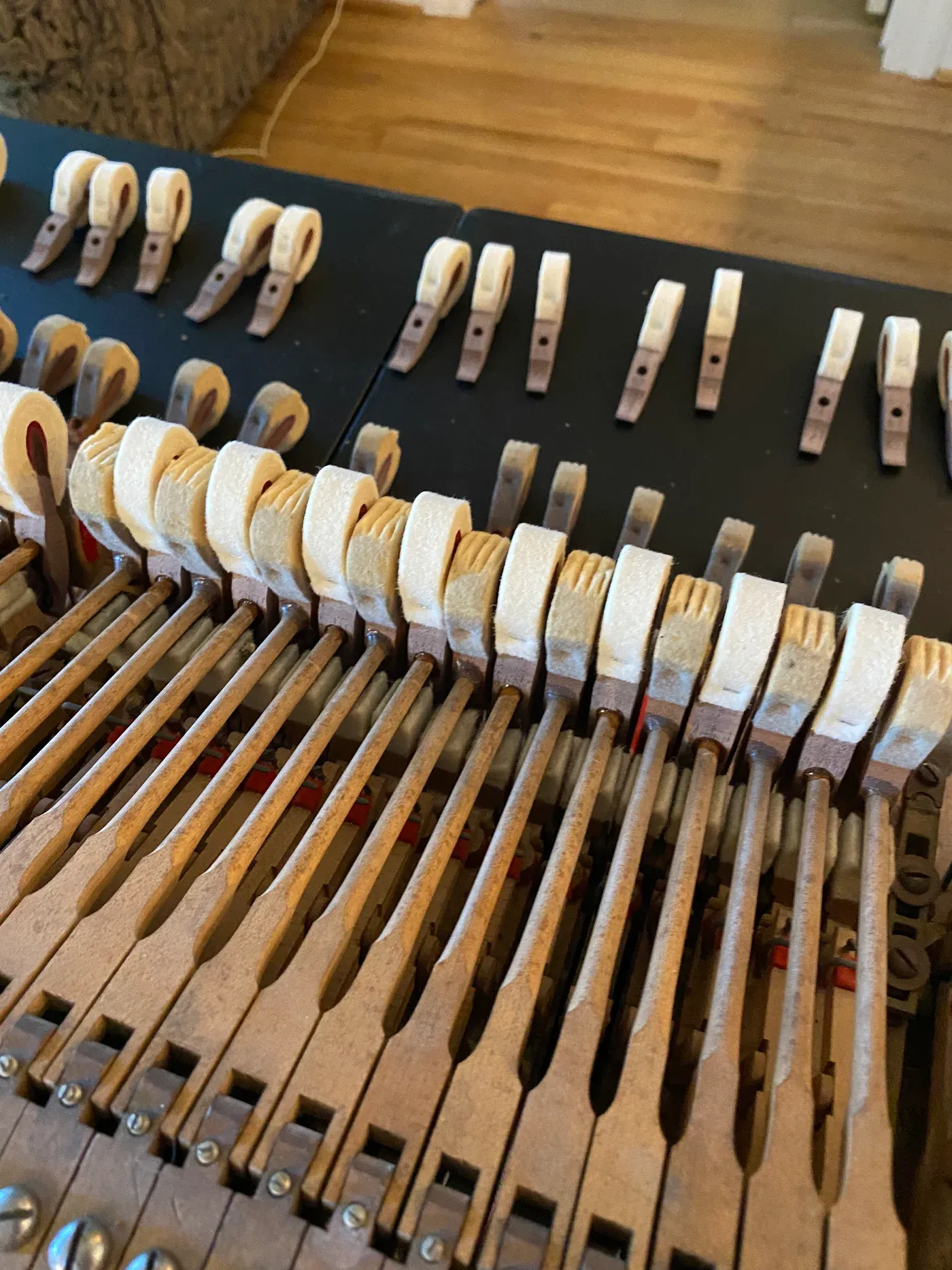
What voicing changes
Voicing attends to tonal character rather than pitch alone. It can help a piano speak with more evenness, color, and clarity when the condition of the hammers and the player’s preferences point in that direction.
All pianos are candidates for voicing. If the hammers are already in good shape, voicing can proceed from the desired tonal direction.
A tonal decision made together
Voicing typically begins with reshaping the hammers. Pierce begins with one note, brings it toward the desired feel and sound, then models that result across the remaining hammers with the client involved in the tonal decisions.
Follow-up care
Major voicing adjustments include a complimentary follow-up appointment after two to three weeks of playing to even out the voicing.
Related piano care
Use these pages to understand the next decision, not to diagnose the piano remotely.