This library is organized around practical piano-owner decisions: when pitch needs attention, how touch and tone differ, what changes after a move, and how climate and condition shape care.
Each guide answers a practical owner question, connects to the relevant service, and keeps general guidance separate from an in-person diagnosis.
How often should a piano be tuned?
A regular schedule of two to four tunings each year is a practical starting point for keeping a piano closer to pitch. A piano that receives regular care is generally less likely to drift far from tune than one left untuned for long stretches.
Playing time, humidity, and temperature all influence pitch. The right cadence for a particular piano still depends on its condition, use, and environment.
Dry conditions and seasonal temperature changes can affect a piano’s pitch and stability. String tension, wood, and felt all respond to the environment around the instrument.
A steady room and regular attention make it easier to notice changes before they become a larger concern. An in-person assessment is the right place to decide what your piano needs.
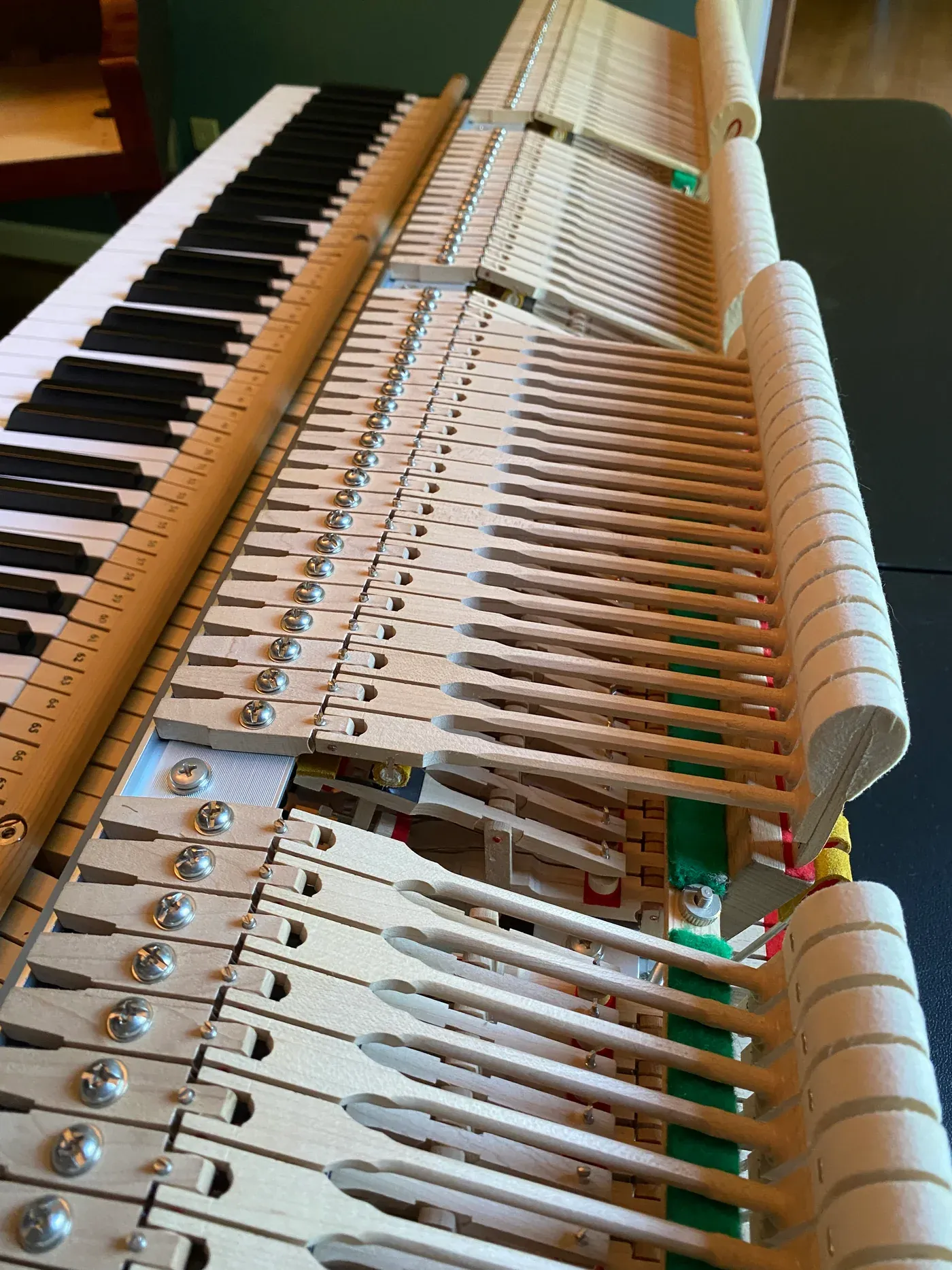
Tuning adjusts pitch. Regulation addresses the consistency and response of the action. Voicing shapes tonal character through careful work on the hammers.
A sticky key, an uneven hammer response, or an unwanted ringing sound may point beyond tuning. The useful next step is an assessment that separates pitch, touch, and tone concerns.
A move changes a piano’s environment and can affect pitch, stability, and mechanical response. There is no universal waiting period that fits every instrument or move.
When arranging an assessment, share when the piano was moved, what you notice, and what has changed in the new room. That context helps begin with the right questions.
Light cleaning is $75 and addresses accessible exterior and interior areas. Deep cleaning is $200 and can involve removing keys, vacuuming interior dust and debris, polishing hardware, and carefully detailing the soundboard area.
Cleaning is more than cosmetic: old dust and debris can collect around the moving parts of the instrument. The right scope depends on the piano’s construction and condition.
A used piano can look promising while still needing a closer look at its tuning pins, action, strings, and overall condition. A technician’s perspective helps turn an uncertain purchase into a better-informed decision.
An inspection is an observation of the instrument in front of you, not a promise about future value or condition. It is a chance to understand the questions that matter before you commit.
These guides provide general piano-care context, not a remote diagnosis. The condition of a specific instrument should be assessed in person, and the writing avoids repeated city names as a substitute for useful local context.